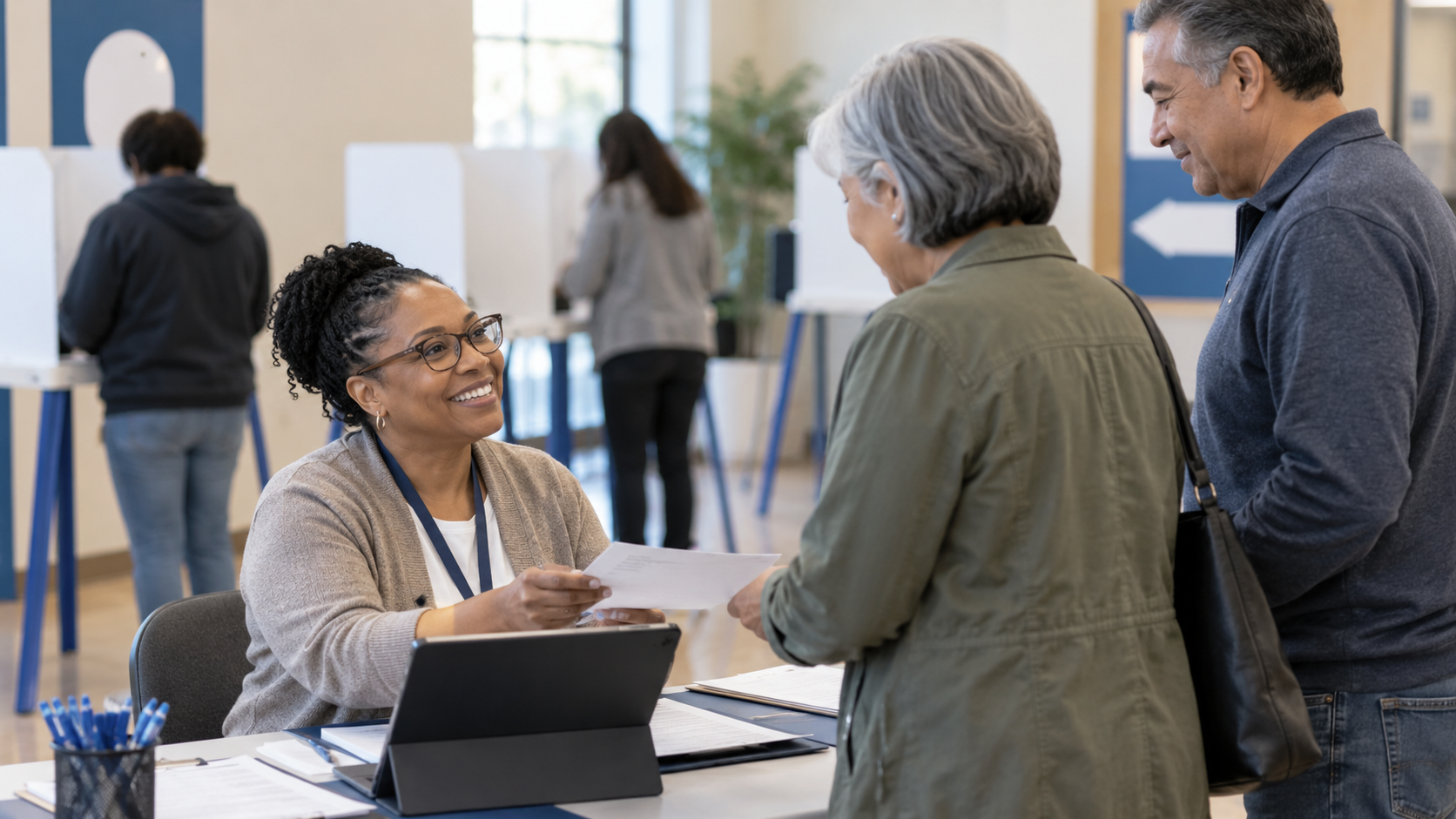
Yes, you can get paid to work the polls—and now is the time to apply.
Local election offices hire temporary workers to set up polling locations, check in voters, issue ballots, explain voting equipment, assist the public, and close the site after voting ends.
The position may be called poll worker, election worker, election inspector, election judge, ballot clerk, or machine tender. It is legitimate government-paid work, and the U.S. Election Assistance Commission provides a national lookup tool that directs applicants to the correct local office.
Election offices need time to review applications, schedule mandatory training, and make assignments. Applying does not guarantee that you will be selected, and some jurisdictions may place applicants on standby.
What the work involves
- Completing required training
- Arriving before the polls open
- Setting up election materials and equipment
- Checking voter information and issuing the correct ballots
- Explaining voting procedures without influencing voters
- Assisting voters with language or accessibility needs
- Following security and documentation procedures
- Reconciling ballots and records
- Closing the polling place after voting ends
Who may be a good fit
This opportunity may suit someone who is patient, dependable, comfortable with basic technology, and able to follow detailed procedures without improvising.
Workers must remain nonpartisan, protect voter information, stay calm with frustrated members of the public, and be available for required training and a potentially very long Election Day. People who speak languages needed in their community may qualify for specialized roles or additional compensation.
There is no national pay rate. Compensation is set locally and may be hourly, daily, or structured as a stipend. Training, lead-worker, technology, or bilingual assignments may be paid differently.
The daily amount is only part of the story. The Election Assistance Commission says poll workers often work more than 12 hours on Election Day and may not be able to leave the polling location. Training, travel, early setup, meals, parking, and closing duties all affect the real hourly return.
For example, New York City currently advertises $250 for Election Day inspectors and poll clerks, plus $100 for attending training and passing the exam—but its stated conditions must be met to receive training pay. That can still be a very long workday.
Finally, this is occasional income. Applying does not guarantee an assignment, and elections cannot provide dependable weekly work.
Questions to ask before accepting
- What is the exact position?
- What are the start and expected end times?
- Is the pay hourly or a daily stipend?
- Is training mandatory, and is it paid?
- Are meals, parking, mileage, or transit reimbursed?
- Are bilingual, technology, or lead-worker premiums available?
- Can workers leave during breaks?
- Is the assignment guaranteed after training?
- When will payment be issued?
- Are partial or split shifts available?